

Scientific programme
Keynote speakers

Maria Ojala
University of Oulu (Finland)
Terry Hartig
Uppsala University (Sweden)
Maria Ojala
University of Oulu (Finland)
Maria Ojala is Professor of Socio-Ecological Resilience at the University of Oulu (Finland) and Associate Professor of Psychology at Örebro University (Sweden). She studied Psychology at Lund University and earned her PhD at Örebro University with a thesis on young people’s hope and worry about global environmental problems. After a postdoctoral period at Örebro, she was Assistant Professor at the Department of Education at Uppsala University. She then returned to Örebro as Associate Professor, where she co-directed the Center for Environmental and Sustainability Social Science (CESSS). She is now part of the FRONT research programme (Frontiers of Arctic and Global Resilience) at the University of Oulu. There she leads the SERSus research group and directs projects on the role of climate-change worry in young people’s lives and learning, and on their trust in climate science.
Throughout her career she has combined quantitative, qualitative and theoretical approaches. She began by studying young people’s values, emotions and ambivalence regarding behaviours such as recycling and household energy saving. She then turned to how children and adolescents cope with climate change and to the role of communication with parents, friends and teachers. She later brought this work into education, developing the concept of “critical emotional awareness” for climate-change education. She has also examined how young people deal with tensions between their values and an unsustainable everyday life. She has led projects funded by all three Swedish research councils and serves on the editorial board of the Journal of Environmental Psychology. Her work has been covered by media such as The New York Times, Wired, Die Zeit and the BBC.
In recent years, her most notable contributions are longitudinal and cohort studies on adolescents’ climate worry and coping patterns, and on their links with wellbeing, pro-environmental action and moral responsibility. They also include an influential review on hope and climate engagement, her participation in a 32-country study on climate anxiety, and new work on teaching controversial sustainability issues.
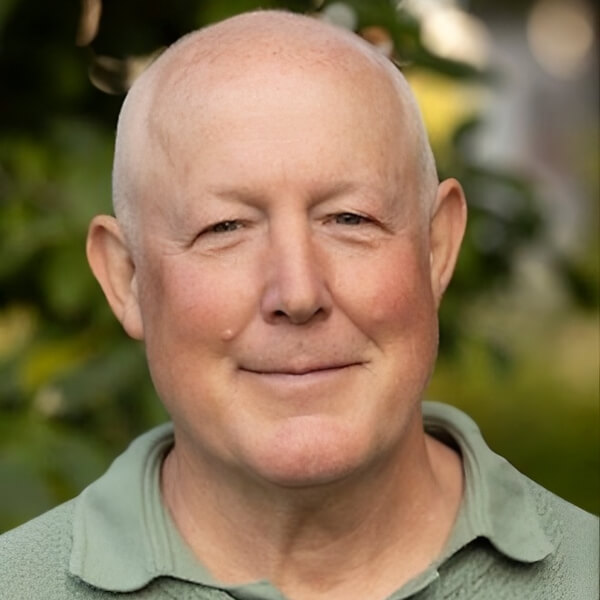
Terry Hartig
Uppsala University (Sweden)
Terry Hartig is Professor of Environmental Psychology at the Institute for Housing and Urban Research (IBF) and the Department of Psychology at Uppsala University (Sweden). He was educated at the University of California. He received his BA at Santa Cruz and his PhD in social ecology at Irvine, with a dissertation testing restorative environments theory. He then completed a Master of Public Health and postdoctoral training in social epidemiology at Berkeley before joining Uppsala University. There he added the residential context of health to his research. Alongside his work at IBF and in Psychology, he is one of the initiators of the Linnaean Collaboration for Studies of Nature, Health and Sustainability, which works with the Linnaean Gardens of Uppsala.
Throughout his career he has brought together environmental psychology, social ecology and social epidemiology to study restorative environments. These are the places that help us recover from everyday psychological wear and tear, such as the home, the neighbourhood and natural settings. He has contributed to the field’s theory and methods, including the Perceived Restorativeness Scale. He has investigated the links between housing, residence and health, as well as collective restoration phenomena at the population level. He has also studied attitudes toward nature and environmental protection. His methods range from laboratory and field experiments to large-scale surveys and time-series studies. He later extended his work to mindfulness interventions in natural settings and to the pathways linking green space and biodiversity with health. In 2025, Uppsala University awarded him the Linnaeus Medal for his career.
In recent years, his most notable contributions are the theoretical framework of “nature-based biopsychosocial resilience” and the research programme designed to test it. They also include his studies on wildlife and psychological restoration and his randomised trials of nature-based interventions for stress and anxiety. Added to these are his contributions to reviews and methodological guidance on green space, health and loneliness.